Design education is essential in developing students’ problem-solving skills and is one way that teachers can foster student’s creativity. Creative problem-solving skills are necessary for the 21st century and therefore, teachers must help foster student’s creativity in the classroom. Design based thinking can be used to solve problems in various fields and can be used in everyday life (Wong & Siu, 2011).
The design process behind Design Thinking is a structured approach to generating and evolving ideas, which has five phases that include; Discovery, interpretation, ideation, experimentation, evolution (IDEO, 2012).
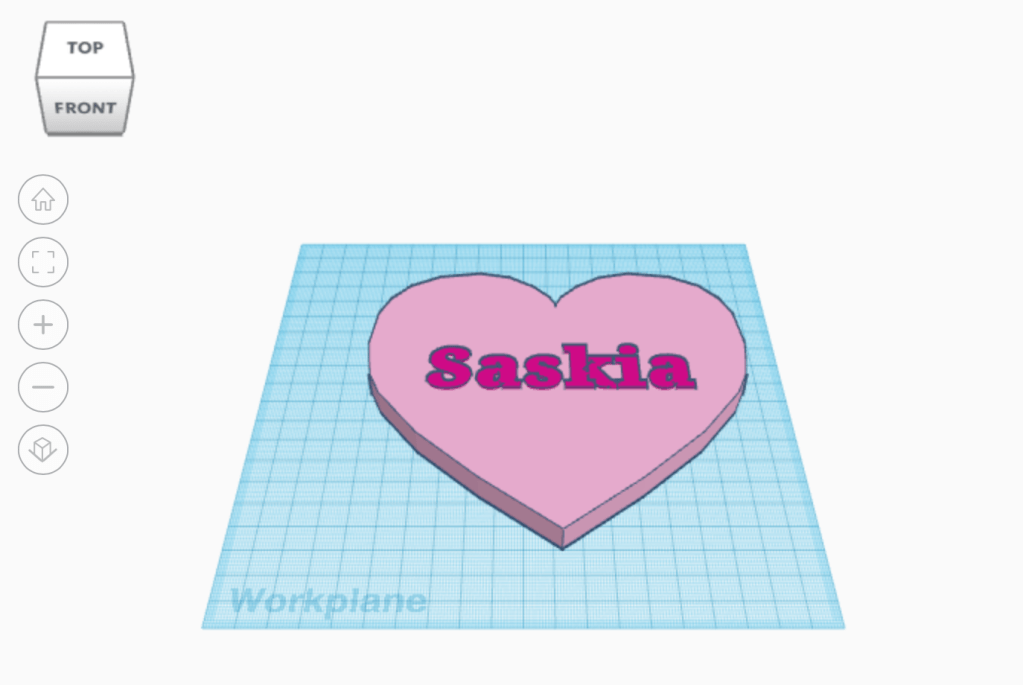
Tinkercad is a computer program where users can design, modify, and print 3D objects. Tinkercad provides students with the opportunity to develop their design-based thinking and creativity by combining multiple simple objects to make more complex and abstract shapes and models. Users can even create smartphone cases, custom Lego pieces, or anything imaginable.
Tinkercad could be used in the classroom in numerous ways:
Students could create designs based on a scientific concept or used in mathematics to create shapes and models. Tindercad could even be implemented into Creative Arts to design individualised projects.
Tinkercad has the option to share and improve upon others’ designs encouraging collaboration with one another and the wider community of online creators.
Key considerations:
There are many benefits to using computer programs such as Tinkercad which are linked with 3D printing in the classroom. However, there are some key consideration. 3D printers are expensive, and therefore having a 3D printer onsite is not feasible for every school. Therefore, there can be an inequality between students/schools who can and cannot access this technology. The teacher’s role in the classroom is also vital to facilitate learning and developing creativity. For teachers to be able to confidently use 3D printers and specific computer programs in their lessons, teachers require professional learning and resources.
References:
IDEO (2012). Design Thinking for Educators (2nd Edition)
Wong, Y., & Siu, L. (2012). A model of creative design process for fostering creativity of students in design education. International Journal of Technology and Design Education, 22(4), 437-450.

