What is VR?
Virtual reality (VR) engages users into a fully simulated computer-generated digital environment which is interactive and immersive. There are two types of VR environments; Desktop VR is computer screen-based and users interact with the virtual world through avatars. Secondly, VR can be mediated through a head-mounted display (HMD) that present visuals directly to the eyes of the user which creates a feeling of presence or ‘being there’ in the virtual world, as wherever you look, it is surrounding you (Southgate, 2018).
Different ways of using VR in the classroom –
VR using an HMD can create first-person experiences which support a social constructivist conception of learning. Anne Frank’s House is a VR program which provides users with a virtual experience, exploring the fully furnished rooms of the Anne Frank house in Amsterdam with narration. This is a powerful tool that can be implemented into History lessons as students learn about WWII. VR gives students the opportunities to explore museums, look at historical and important sites all without having to leave the classroom.
In contrast, another VR app which can be used in the classroom is InCell. InCell is a game-based system that takes the user into a virtual experience of the microworld of human cells. Users explore cells and engage in missions such as protecting the cell, outrun a virus, or deliver the vaccine. This VR experience can be implemented as a part of a science lesson however is not overly educational – more of an engaging game.
VR has the potential to create educational learning experiences in science, technology and engineering laboratories in a cost-effective way to experiment and perform tasks with virtual equipment.
Can VR promote creativity?
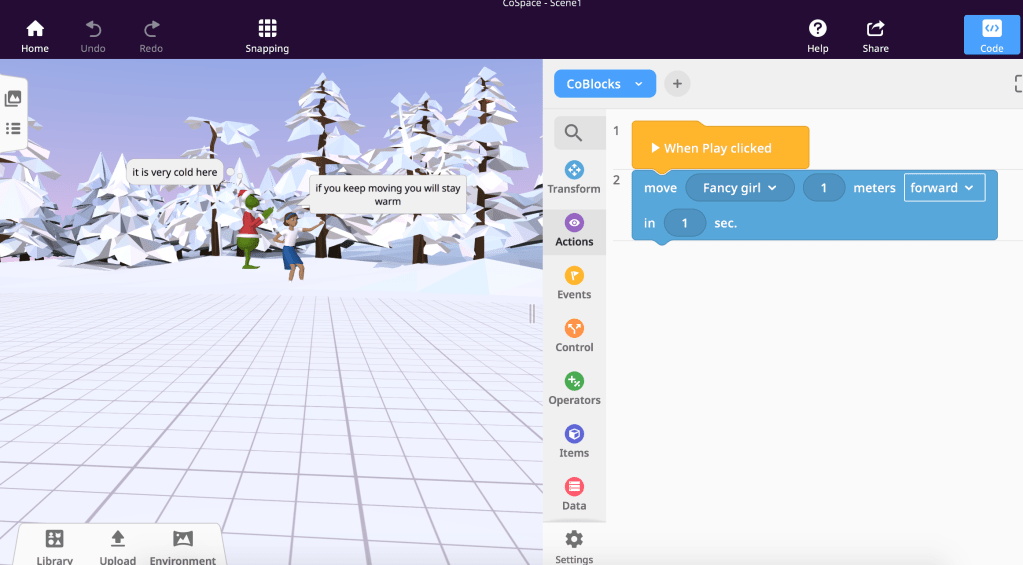
VR can also be an effective tool to foster creativity. CoSpacesis an online platform where users can create and explore 3D environments on a desktop or mobile device. Students build computational thinking skills through creating and customising their space. Students develop coding capabilities and are provided with endless creative opportunities.
Pedagogical considerations –
Virtual reality experiences can have powerful effects on students similar to a response to an actual experience as it can appear extremely real and believable. It is important to have content consideration when deciding on a VR experience for students. For example, some students may not be able to cognitively regulate the experience and students at different developmental stages can react differently to content and affordances of VR.
References:
Southgate, E. (2018). Immersive virtual reality, children and school education: A literature review for teachers. DICE Report Series Number 6.


Hi Saskia! I love the layout of your blog, it is very easy to navigate through. I also like how you have included your coding attempt in this blog, however, having a video tutorial may allow some users to understanding CoSpaces more in depth.
This was a great overview of VR, and how it can be used in the classroom. I liked reading about the contrasting apps that you can use, which include InCell, CoSpaces, and Anne Frank’s house. Learning about the different KLA’s that could be taught using these apps was interesting and something that I will take on board for my own teaching practices. Which application out of the three you focused on do you think you would use in the classroom as a regular tool to assist student’s learning? There are so many great VR applications on the market for use in the classroom, and sometimes deciding which one works best can be difficult as they all have different purposes.
Your pedagogical implications are interesting as well, I hadn’t thought about the fact some student’s may not cognitively regulate the experience as fast as other’s.
Overall, a great read! Keep up the great posts
LikeLike
Hi Hannah,
Thanks for your comment. I really enjoyed researching the different types of education VR tools available to use in the classroom. I think the three application were all very different and had very different purposes. I thought CoSpaces is a great tool for students to learn coding skills and gives studnets the most opportuites to be creative.
LikeLike
Hi Saskia, I really enjoyed your blog! I particularly like how you’ve outlined the benefits of VR in the classroom as well as give multiple examples of how the technology can be integrated into the classroom. I particularly liked how you mentioned the Ann Frank museum. I had no idea that such a virtual museum existed but its such a cool way to have students immerse themselves without having to leave the comforts of a classroom. As the museum itself is situated in the Netherlands, its giving students access to a piece of history that would never have been possible without VR. Thanks so much for this blog!
LikeLike
Hi Georgia, thanks for your comment. I had never heard or seen virtual museums before until I began to research ways to integrate virtual reality into the classroom. I think it would be such an engaging learning experience for students and also assist teachers in creating learning experiences that were previously impossible, possible! I can’t wait to see VR further develop in the future.
LikeLike