With technology rapidly developing, students must experience and develop skills in computational thinking and coding to be effective 21st-century learners, and to be successful in future careers and jobs (Hershkovitz, Sitman, Israel- Fishelson, Egnuiluz, Garaizer & Guenaga, 2019).
What is a Micro bit?
The Micro bit is a physical computing device that can be efficiently used in schools to develop computational thinking, coding skills creativity, and learning. The Micro bit is a coding device that connects to an online platform. Students simply plug their Micro bit into a tablet, iPad or computer device and begin creating their codes on the online platform. This code can then be downloaded onto the Micro bit. Micro bit provides students with opportunities to design, build and prototype.
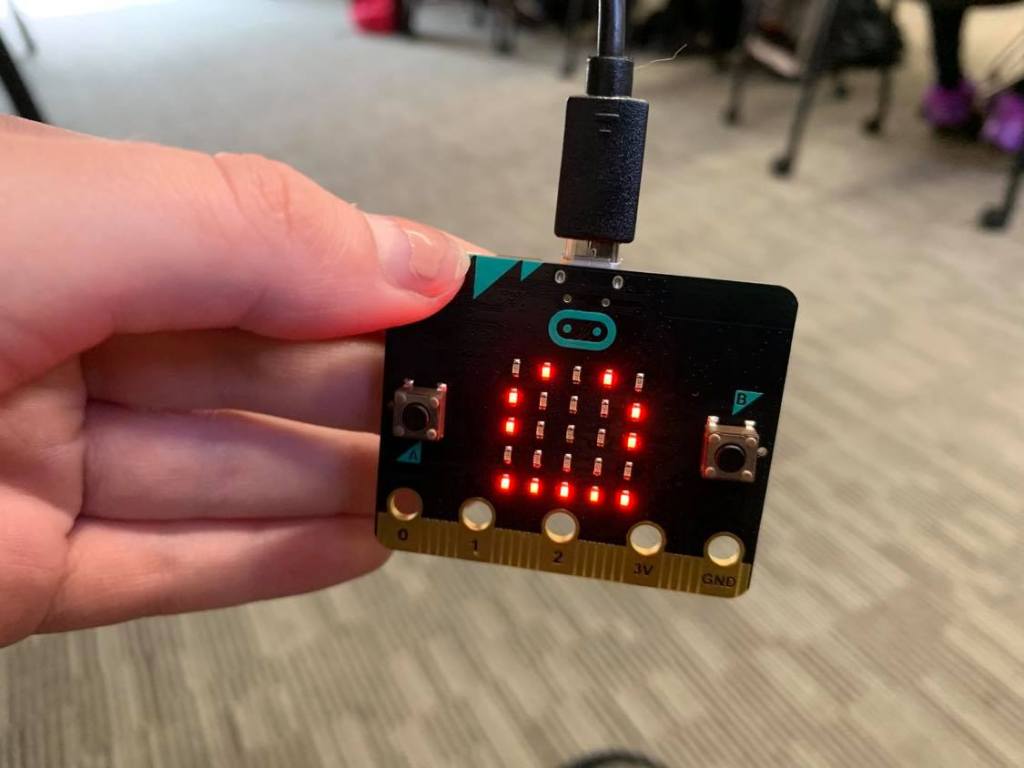
Using micro bit in the classroom allows teachers to introduce coding and programming experiences to students who have little knowledge or skills of using coding (Teiermayer, 2019). With the simplicity of the program, students can have immediate success, but also develop into more sophisticated designs as knowledge and understanding grows. Using the micro bit increases student’s motivation and engagement to learning and develops collaborative work amongst students.
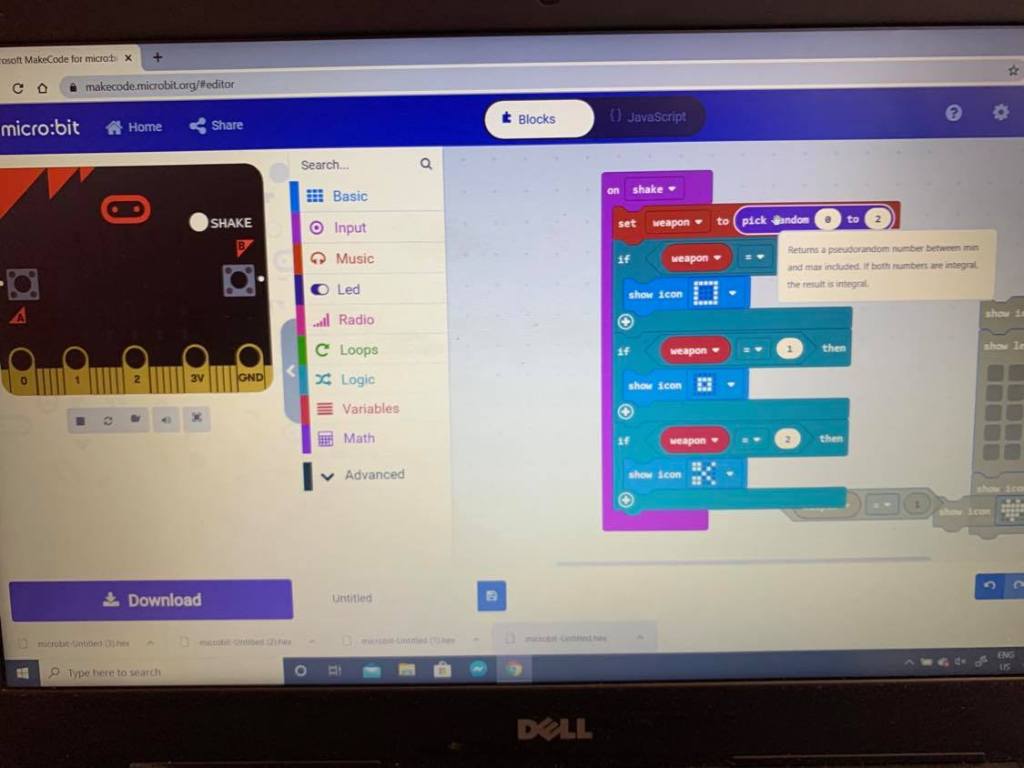
So how can the Micro bit foster digital creativity?
The Micro bit allows students to explore their ideas and create many different codes. Students can explore different functions, patterns, and tools available on the programming platform to create their desired code. Students are given code functions and patterns, but these can be used however students choose.
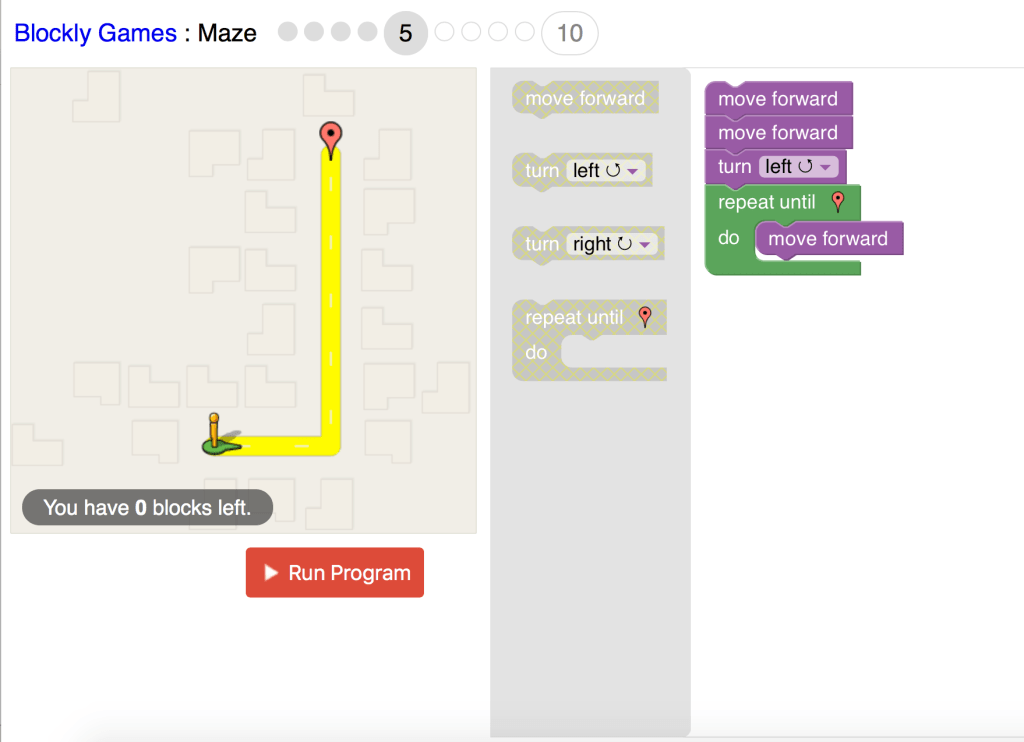
In comparison, Blockly Games Maze is a similar coding platform. However, this platform implements coding through games. Students create a code to make their way through a maze. Once achieved, students progress to the next level. The coding functions, patterns and tools, are very similar to the Micro bit and therefore once they’re familiar with one platform, the other platform is easy to master. Blockly Games Maze is very engaging for students and increases motivation. However, student’s creativity is restrained as they can only make codes which will let them succeed at a particular level to move onto the next.
I believe using the Micro bit effectively develops students computational thinking, coding skills and also fosters student’s creativity from a young age, which is essential in this world of increasing technological devices.
References:
Hershkovitz, A., Sitman, R., Israel-Fishelson, R., Eguíluz, A., Garaizar, P., & Guenaga, M. (2019). Creativity in the acquisition of computational thinking. Interactive Learning Environments, 27(5–6), 628–644. https://doi.org/10.1080/10494820.2019.1610451
Teiermayer, A. (2019). Improving students’ skills in physics and computer science using BBC Micro:bit. Physics Education, 54(6), 065021. https://doi.org/10.1088/1361-6552/ab4561
 Educ3620 Digital Creativity and Learning